Spanakorizo: Greek Spinach Rice with Lemon and Dill
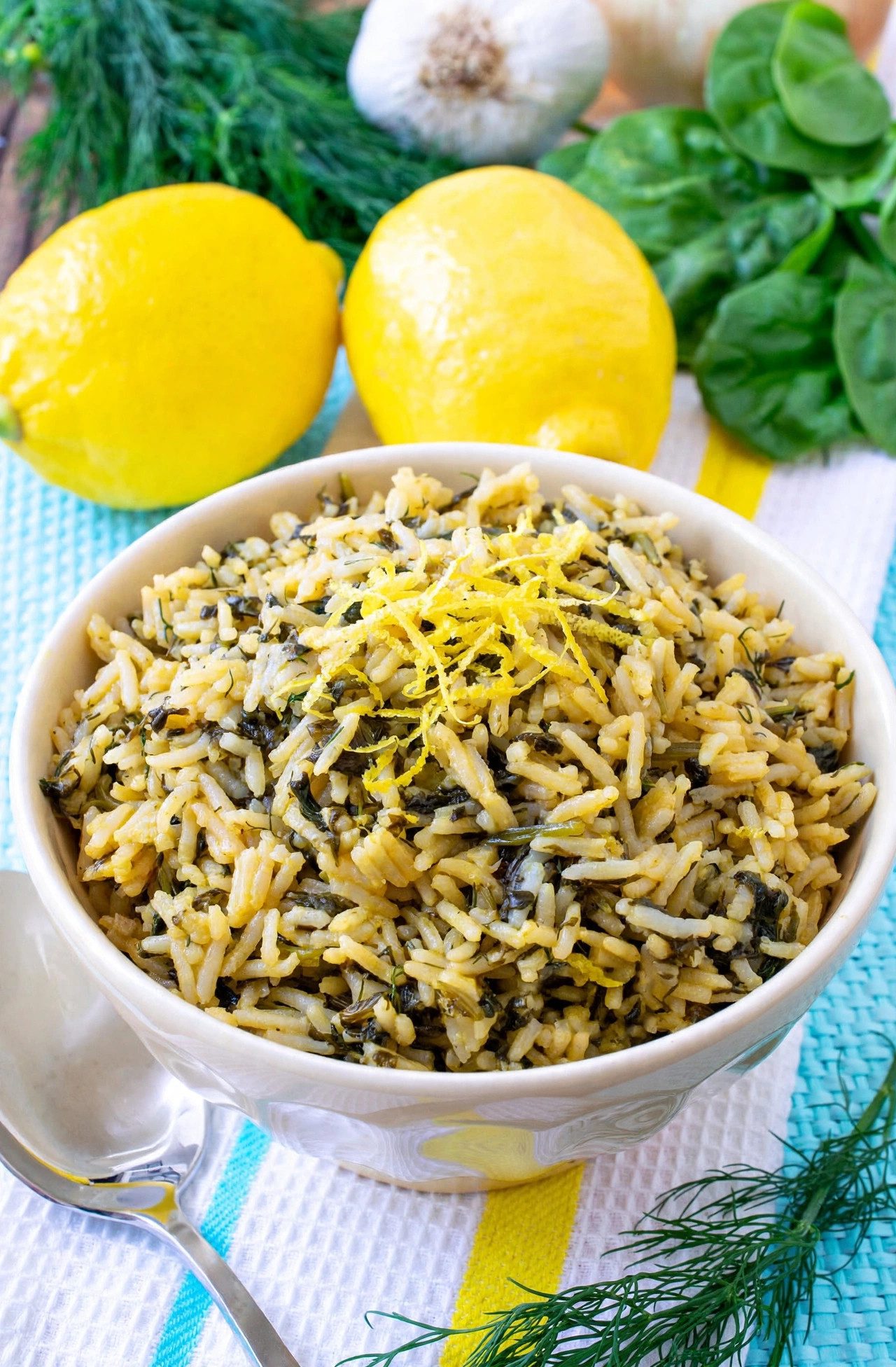
Spanakorizo is the fast-day cook's friend: rice and spinach, dill and lemon, thirty minutes from start to table, and a pot of green, fragrant comfort that sits happily beside almost anything else the Lenten table offers — or stands alone as a light main meal with bread and olives. It is the dish Greek grandmothers make when the day has been long and the fast is still the fast: cheap, quick, and somehow greater than its five minutes of actual work.
The spinach wilts into the rice as it cooks, staining it green; the dill goes in twice, half cooked for depth and half raw at the end for brightness; and the lemon — zest in the pot, juice at the finish — keeps the whole bowl awake. It belongs to the wine-and-oil days, since the spinach is first softened in olive oil, and it is one of the most useful recipes in this collection: the one you will make on the Fridays of ordinary weeks, all year long.
Ingredients
- 1 cup basmati rice, rinsed well
- 2 tbsp olive oil
- ½ cup chopped onion
- 1 tbsp minced garlic
- Zest of 1 lemon
- ½ tsp ground cumin (optional — a modern touch)
- 225 g (8 oz) baby spinach, coarsely chopped
- 2 cups vegetable broth
- 4 tbsp chopped fresh dill, divided
- ½ tsp fine salt
- Freshly ground black pepper, to taste
- Juice of 1 lemon (about 3 tbsp)
Method
- Rinse the rice in a fine-mesh strainer under cold running water until the water runs mostly clear. Set aside to drain.
- Heat the olive oil in a medium saucepan over medium heat. Cook the onion until translucent, about 3–5 minutes, then add the garlic and cook for one minute more.
- Add the lemon zest, the cumin (if using) and the spinach. Cover the pan and cook for 3–5 minutes, until the spinach has wilted down completely.
- Stir in the rice, the vegetable broth, half the dill, the salt and the pepper. Bring to the boil.
- Reduce to the lowest simmer, cover, and cook for about 15 minutes, until the rice is tender and the broth absorbed. Take off the heat and leave, still covered, for 5 minutes.
- Stir in the lemon juice and the remaining dill. Serve at once, with a little extra lemon zest over the top if you like.
Rule source: Orthodox fasting rule per the Typikon (chs. 32–33), as published in OCA and GOARCH fasting guidance: on a wine-and-oil day, meat, dairy, eggs and fish are still set aside, but wine and olive oil are permitted.
Notes
- The broth must be vegetable. The source's own FAQ suggests chicken stock as an option; for a fasting table it is not one. Vegetable broth — or simply water, with a little more salt and lemon — is what this record specifies.
- About the cumin. A small pinch of cumin is this source's modern touch; it is not traditional in Greek spanakorizo. It is listed as optional — leave it out for the classic dish.
- Frozen spinach. Works well: thaw it fully, then squeeze it dry in handfuls before it goes into the pan, or the rice will be wet.
- No feta, no egg. Spanakorizo is sometimes crowned with feta or a fried egg on ordinary days. Both are dairy/egg, both are off the fast-day table, and neither appears here or in the photo.
- Leftovers. Keeps 3 days in the fridge; reheat gently with a spoonful of water and a fresh squeeze of lemon.
Frequently asked questions
When can I eat spanakorizo during the fast?
On wine-and-oil days. The dish itself is only rice, spinach, herbs and lemon — it is the olive oil the spinach is softened in that sets its level.
Can I use a different rice?
Basmati gives separate, fluffy grains. Jasmine rice works but is stickier; any long-grain rice will do. Brown rice needs about 40 minutes and extra broth.
Can I make it ahead?
It is best fresh, while the dill and lemon are bright, but it reheats well. Stir in a little fresh dill and lemon juice after reheating to wake it up. ---