Gigantes Plaki: Greek Giant Beans Baked in Tomato Sauce
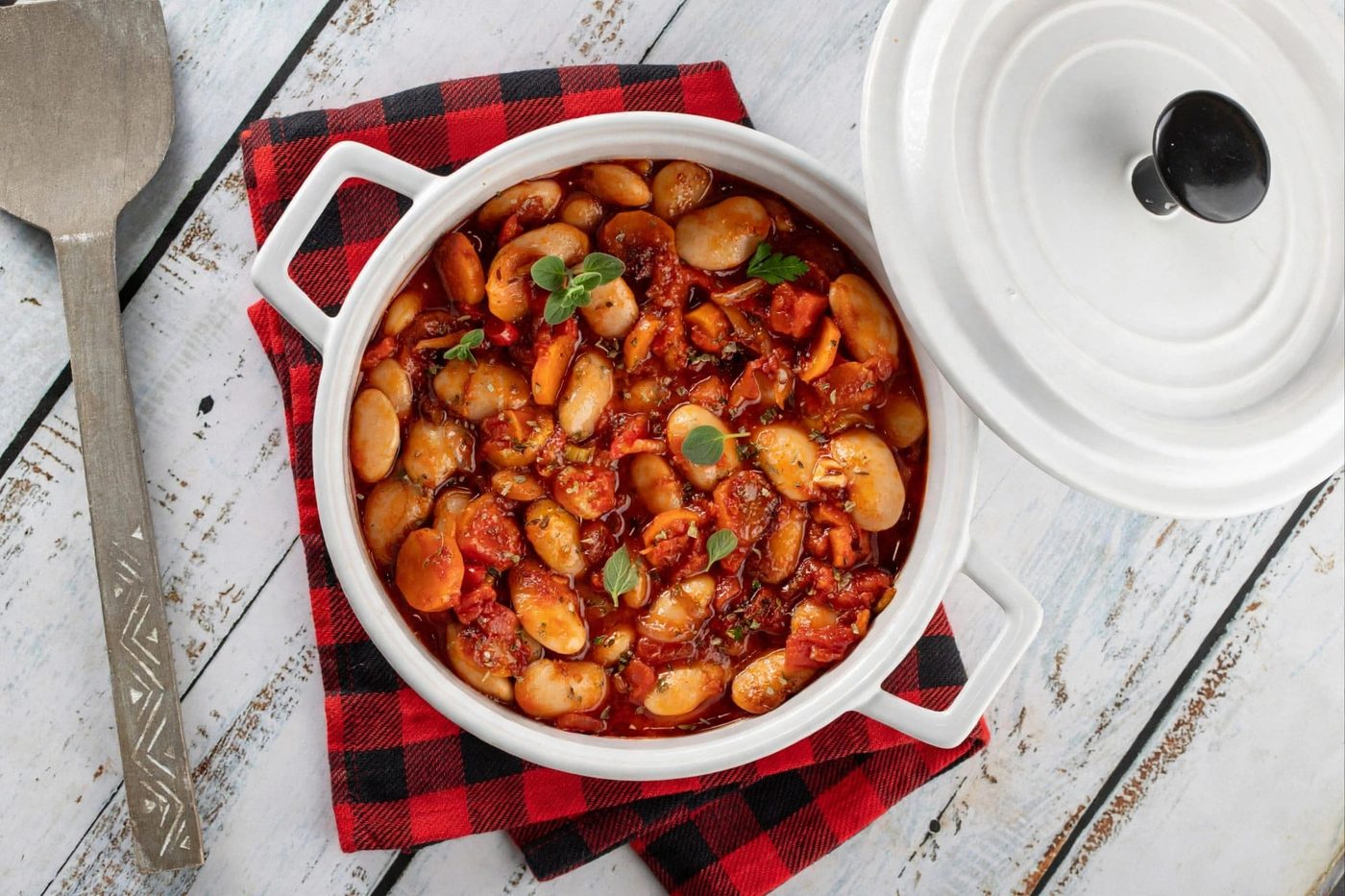
Some fasting dishes feel like abstinence. Gigantes plaki does not. These are the beans named for what they are — giants — simmered until tender, then baked in a tomato sauce rich with olive oil, peppers, carrots and dill until everything slumps together into something closer to a stew than a side dish. In Greek homes it is a main course, eaten with bread and appetite, and during the fasts it is one of the dishes people actually look forward to.
It belongs, honestly, to the wine-and-oil days: the Saturdays and Sundays of Great Lent, and the feast-day relaxations, when olive oil returns to the kitchen and the Lenten table gets its second wind. Two hundred millilitres of oil sounds like a lot until you taste the sauce it makes — the oil is not a cooking medium here, it is half the dish. Make it on the right day, and make plenty: gigantes are even better reheated.
Ingredients
- 500 g dried giant beans (gigantes), soaked overnight in cold water
- 1 large onion, thinly sliced
- 2 garlic cloves, chopped
- 800 g crushed tomatoes
- 2 red peppers, cut into thin slices
- 1 celery stick, chopped
- 2 carrots, thinly sliced
- ½ bunch fresh dill, chopped
- 200 ml olive oil
- 1 tsp fine salt, or to taste
- Freshly ground black pepper, to taste
Method
- Drain the soaked beans and put them in a deep pot. Cover with fresh water and simmer for 40–50 minutes, skimming now and then, until the beans are soft but still holding their shape. Drain them, keeping back about 200 ml (1 cup) of the cooking water.
- Heat the oven to 180°C (350°F), fan if you have it.
- Warm half the olive oil in a frying pan over medium heat. Add the onion, garlic, red peppers, celery and carrots and cook for about 5 minutes, until they soften and sweeten at the edges.
- Tip the beans into a large, heatproof baking dish. Add the cooked vegetables, the crushed tomatoes, the rest of the olive oil, the reserved bean water and the dill. Season with the salt and pepper and fold everything together gently.
- Bake for 50–60 minutes, until the beans are meltingly soft and the sauce has thickened and darkened around the edges.
- Serve hot, straight from the dish, with bread for the sauce.
Rule source: Orthodox fasting rule per the Typikon (chs. 32–33), as published in OCA and GOARCH fasting guidance: on a wine-and-oil day, meat, dairy, eggs and fish are still set aside, but wine and olive oil are permitted.
Notes
- Bean water is an ingredient. The reserved cooking liquid carries the beans' starch and flavour into the sauce. Don't throw it away and reach for the tap.
- A soaking shortcut. A pinch of baking soda (about ¼ tsp per litre) in the soaking water helps the beans soften evenly — a classic Greek kitchen trick.
- Canned beans. Two large cans of butter (lima) beans, drained, can stand in for the dried beans: skip the simmer and go straight to the baking dish, with a splash of water in place of the bean liquid, and bake about 40 minutes.
- No feta. Gigantes are often served with feta on ordinary days. On a fast day the dish is complete without it — and this version, and its photo, leave it out.
- Storage. Keeps 4 days in the fridge and freezes well; the sauce loosens with a spoonful of water when reheated.
Frequently asked questions
When can I eat gigantes plaki during Lent?
On wine-and-oil days — the Saturdays and Sundays of Great Lent, and days your calendar relaxes the fast to oil. The dish contains no meat, dairy, egg or fish; it is the olive oil that sets its level.
Can I use regular white beans instead of gigantes?
Yes — large butter beans are the standard substitute, and ordinary navy beans work too, though they will break down more in the baking. Reduce the simmering time for smaller beans.
Why bake them after simmering?
The oven is what turns a bean soup into plaki: the sauce reduces, sweetens and clings to the beans. The dish is named for the shallow baking pan (plaki) it is finished in. ---