Fasolakia Lathera: Greek Green Beans Braised in Tomato and Olive Oil
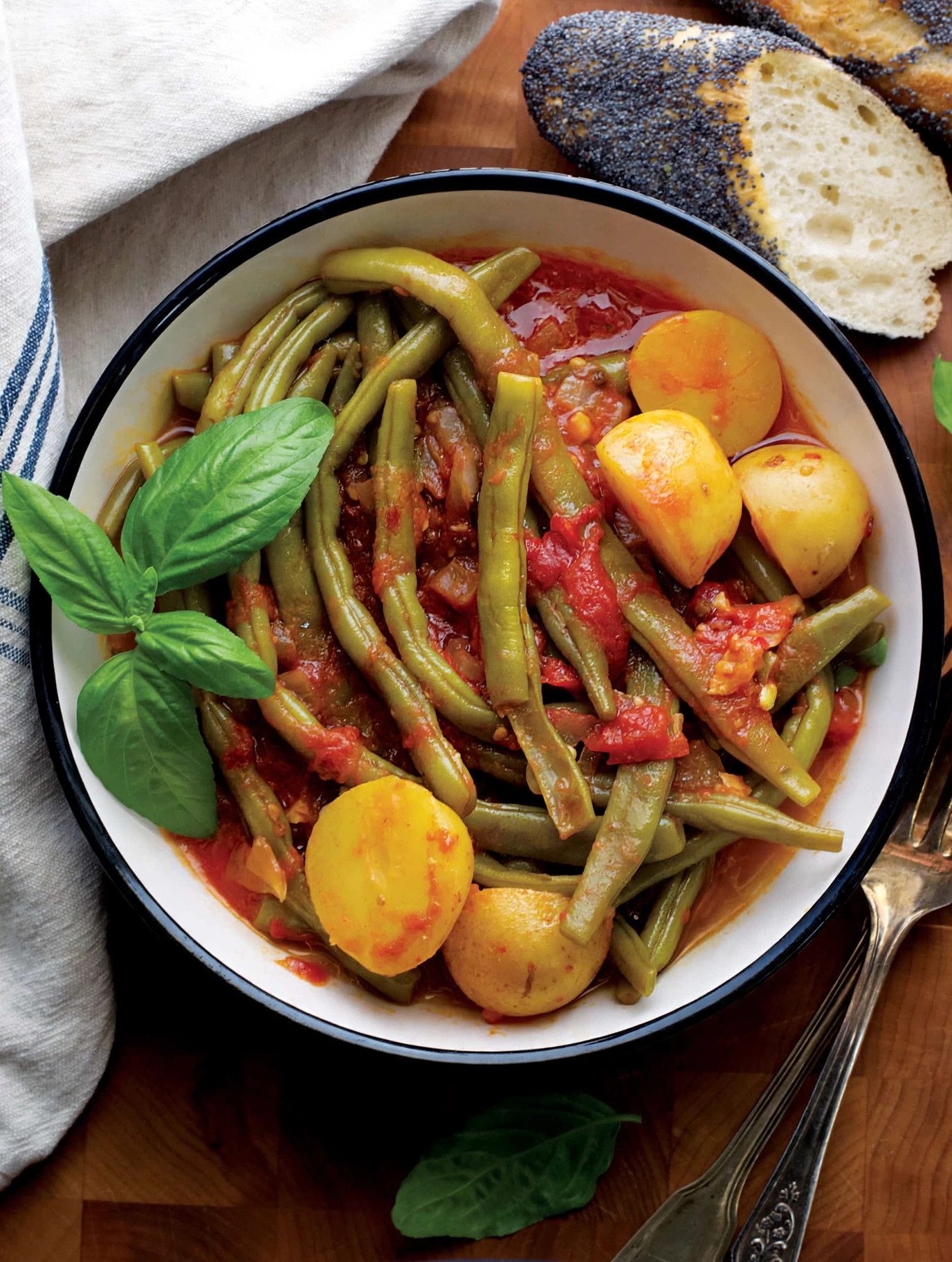
Lathera — from ladi, oil — is the name Greek cooking gives to a whole family of vegetable dishes where the olive oil is not a cooking medium but the sauce itself. Fasolakia is their king: green beans and potatoes simmered slowly in tomato and a great deal of olive oil until the beans surrender completely, the potatoes drink up the sauce, and everything arrives at the table soft, silky and red. It is one of the most-cooked dishes in Greece, appearing on family tables once a week, and all through the fasts.
Forget everything crisp and bright-green you know about green beans. Fasolakia are cooked past the point a French chef would allow, on purpose, until they give up their structure to the sauce. Made on a wine-and-oil day — a Saturday or Sunday in Lent, when the oil comes back — they are a main dish: bread, beans, sauce, and nothing missing. The wedge of feta many families set beside the bowl belongs to ordinary days; this fasting version leaves it off, and loses nothing.
Ingredients
- 900 g (2 lb) fresh green beans, rinsed, drained and trimmed
- 300 g baby potatoes, cut in half
- ⅔ cup extra-virgin olive oil
- 800 g (28 oz) canned whole tomatoes, crushed by hand
- 1 onion, diced
- 3 garlic cloves, minced
- 2 tbsp chopped fresh herbs (parsley, basil or oregano)
- Dried oregano, a pinch or two
- 1 tsp sea salt, or to taste
- Freshly ground black pepper, to taste
Method
- Heat half the olive oil in a large stockpot over medium heat. Add the onion and cook for a few minutes, until transparent and fragrant. Add the garlic and cook for one minute more.
- Add the green beans, potatoes and the hand-crushed tomatoes with their juices. Season with the salt, pepper and dried oregano and stir everything well. Do not add water — the beans braise in the tomato juice.
- Cover the pot and simmer over low heat for about 40 minutes, until the beans are completely soft and have turned olive-drab and yielding — fasolakia are meant to be soft, never crisp.
- Stir in the remaining olive oil and the fresh herbs. Simmer, uncovered, for another 5–10 minutes, until most of the liquid has reduced to a thick, glossy sauce.
- Rest for a few minutes and serve warm or at room temperature, with plenty of crusty bread for the sauce.
Rule source: Orthodox fasting rule per the Typikon (chs. 32–33), as published in OCA and GOARCH fasting guidance: on a wine-and-oil day, meat, dairy, eggs and fish are still set aside, but wine and olive oil are permitted.
Notes
- Don't cut the oil. In lathera cooking the oil is the sauce; reducing it gives you stewed beans in tomato water, which is a different and lesser dish. Save this recipe for an oil day and make it properly.
- No added water. The beans braise in their own juice and the tomato's. If the pot ever looks dry — older beans can drink a lot — add warm water a quarter cup at a time.
- Frozen beans work. Use them straight from the freezer, without thawing, and expect them to finish 10–15 minutes sooner than fresh.
- Potatoes are traditional but optional. Many island versions are beans alone. Keep the potatoes if this is the day's main meal; they make it one.
- Better tomorrow. Like all lathera, fasolakia improve overnight and keep 4–5 days in the fridge.
Frequently asked questions
When can I eat fasolakia during the fast?
On wine-and-oil days — Saturdays and Sundays in Great Lent, and feast-day relaxations. There is no meat, dairy, egg or fish in the dish; it is the generous olive oil that sets its level.
Should the beans still be bright green?
No — and if they are, they are not done. Fasolakia are cooked until soft and olive-coloured, fully merged with the sauce. That softness is the dish.
Why is the feta missing?
Feta beside the bowl is the classic non-fasting serving. Dairy is not eaten on any fast day at this level, so our version — and its photo — leave it out. ---