Koliva: Wheat Berries for the Memorial Services
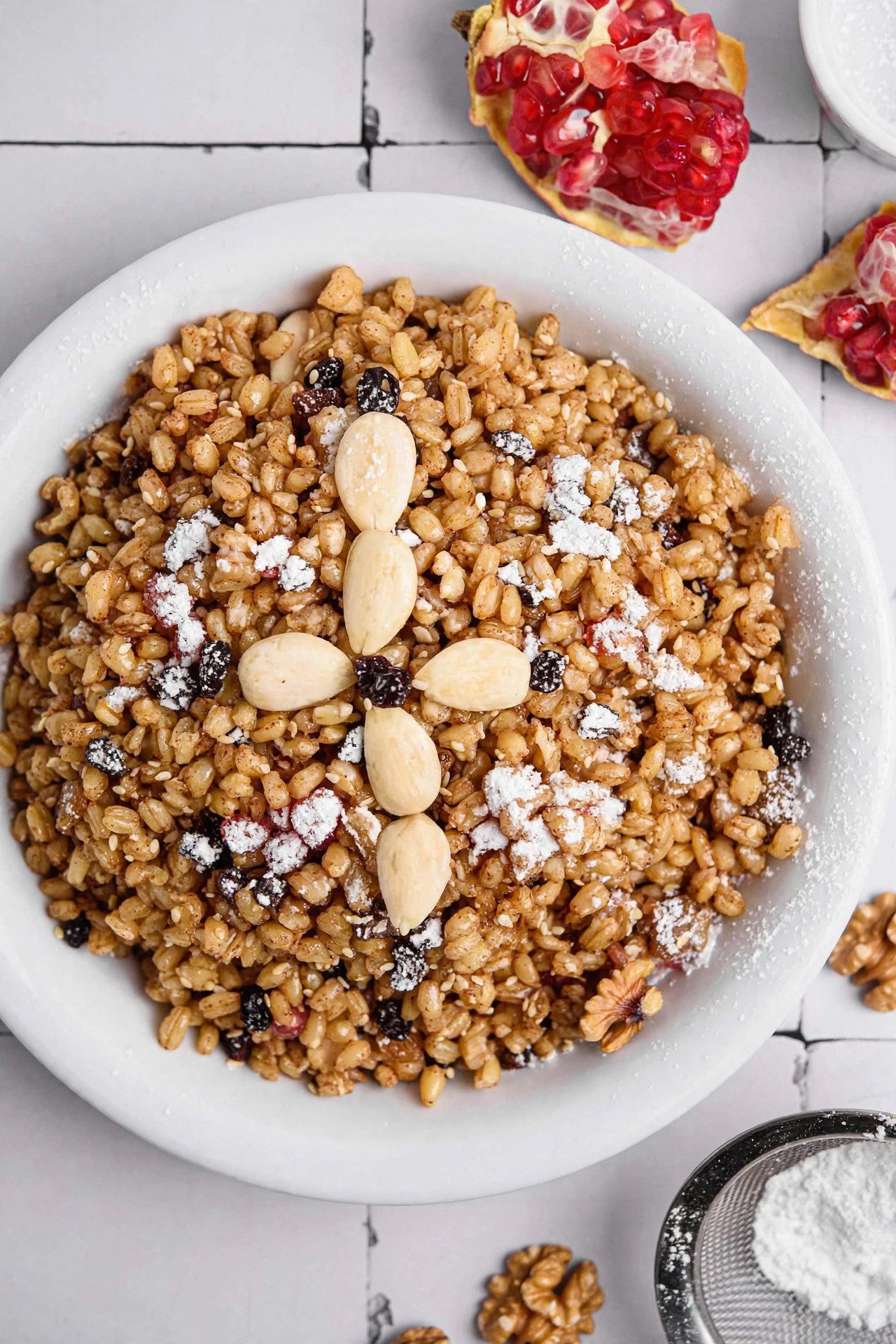
Koliva is not party food, and it is not quite dessert. It is the dish a family carries to church after a death — boiled wheat berries folded with nuts, sesame, raisins and pomegranate, sweetened gently, spiced with cinnamon and clove, and mounded into a dome crowned with a cross. It is blessed at the memorial service, then shared, spoonful by spoonful, in memory of the departed.
The wheat is the sermon. "Unless a grain of wheat falls into the earth and dies, it remains alone; but if it dies, it bears much fruit" (John 12:24). The dead grain that rises again as a living plant is the Church's oldest picture of the resurrection, and koliva puts it on a plate: what is buried is not finished. The sweetness is part of the meaning too — the hope that the departed have entered the sweetness of Paradise. Families make koliva for the third, ninth and fortieth days after a death, at three, six and twelve months, on anniversaries, and on the Soul Saturdays of Great Lent set aside for remembering all the dead.
By the ingredients themselves, koliva is one of the most austere dishes in this collection — grain, nuts, seeds, fruit and spice, nothing else — yet it is tagged here as a memorial dish rather than a strict-day one, because that is what it is: its place is the memorial table, not the fast-day menu.
Ingredients
- 200 g (1 cup) wheat berries
- 60 g walnuts, chopped
- 60 g blanched almonds, chopped
- 3 tbsp sesame seeds
- 9 tsp red raisins
- 5 tsp golden raisins
- 300 g pomegranate seeds (from about 2 pomegranates)
- 4 tsp sugar
- 1¼ tsp ground cinnamon
- ¼ tsp ground cloves
- A pinch of salt
- Icing sugar, for dusting the top
Method
- The night before: rinse the wheat berries, put them in a bowl, and cover with plenty of cold water. Leave to soak overnight.
- Drain and rinse the wheat. Put it in a pot with 5 cups of fresh water. Bring to the boil, skimming off the froth from the top, then reduce the heat and simmer for 20–40 minutes, until the grains are just tender and chewy — taste as you go; some have just begun to split.
- Drain the wheat well (10 minutes in a colander), then spread it out on a clean towel. Pat it dry and leave it until it is completely dry and cool — an hour or more. Damp wheat makes wet koliva; this step is the whole secret.
- If you are adding any of the optional extras (see Notes), prepare them now.
- Fold everything together in a large bowl: the wheat, walnuts, almonds, sesame seeds, both raisins, pomegranate seeds, sugar, cinnamon, cloves and the pinch of salt. Mix thoroughly and taste — adjust the sugar if you like.
- Line your serving plate with greaseproof paper (it keeps the plate free of pomegranate stains), mound the koliva on it, and shape it into a neat, smooth dome with the back of a spoon.
- For the traditional decoration: use about 6 of the blanched almonds to form a small cross on top of the mound, then dust the whole dome with icing sugar. Serve at room temperature, in small spoonfuls.
Rule source: Memorial services are held on the Soul Saturdays of Great Lent and on the memorial days after a death (the 3rd, 9th and 40th days; the 3rd, 6th and 12th months; and yearly); koliva is offered in memory of the departed, and wine and oil are permitted in practice — the dish itself is oil-free by nature.
Notes
- Dry wheat, always. The hour on the towel is not fussy — damp wheat turns the mound soggy and the icing-sugar dusting blotchy. Give the grains time.
- The extras. Regional and family variations add chopped fresh parsley (for the green of Paradise), ground cumin, breadcrumbs to firm the mound, dragees, or pomegranate replaced by extra raisins out of season. None is required; all are traditional somewhere.
- Honey instead of sugar is a common family variation — equally traditional.
- Make-ahead and storage. Koliva keeps well for up to 5 days in the fridge, which is why it can be made the day before a service. Bring it to room temperature before serving; the flavours are muted cold.
- Quantity. A memorial tray for a parish is this recipe multiplied many times over — the proportions scale directly.
Frequently asked questions
When is koliva served?
At memorial services: the third, ninth and fortieth days after a death; at three, six and twelve months; on yearly anniversaries; and on the Soul Saturdays of Great Lent, when the Church remembers all the departed together.
What does the wheat symbolise?
The grain of wheat in John 12:24 — what is buried in the earth and rises again. Koliva is a edible statement of the hope of the resurrection, and its sweetness points to the sweetness of Paradise.
Can I use another grain?
Wheat berries are the tradition, and the symbolism depends on them. Pearl barley is the closest substitute in texture; rice-based versions exist in some places but lose the point of the dish. ---