Fasolada: A Greek Bean Soup for Orthodox Lent
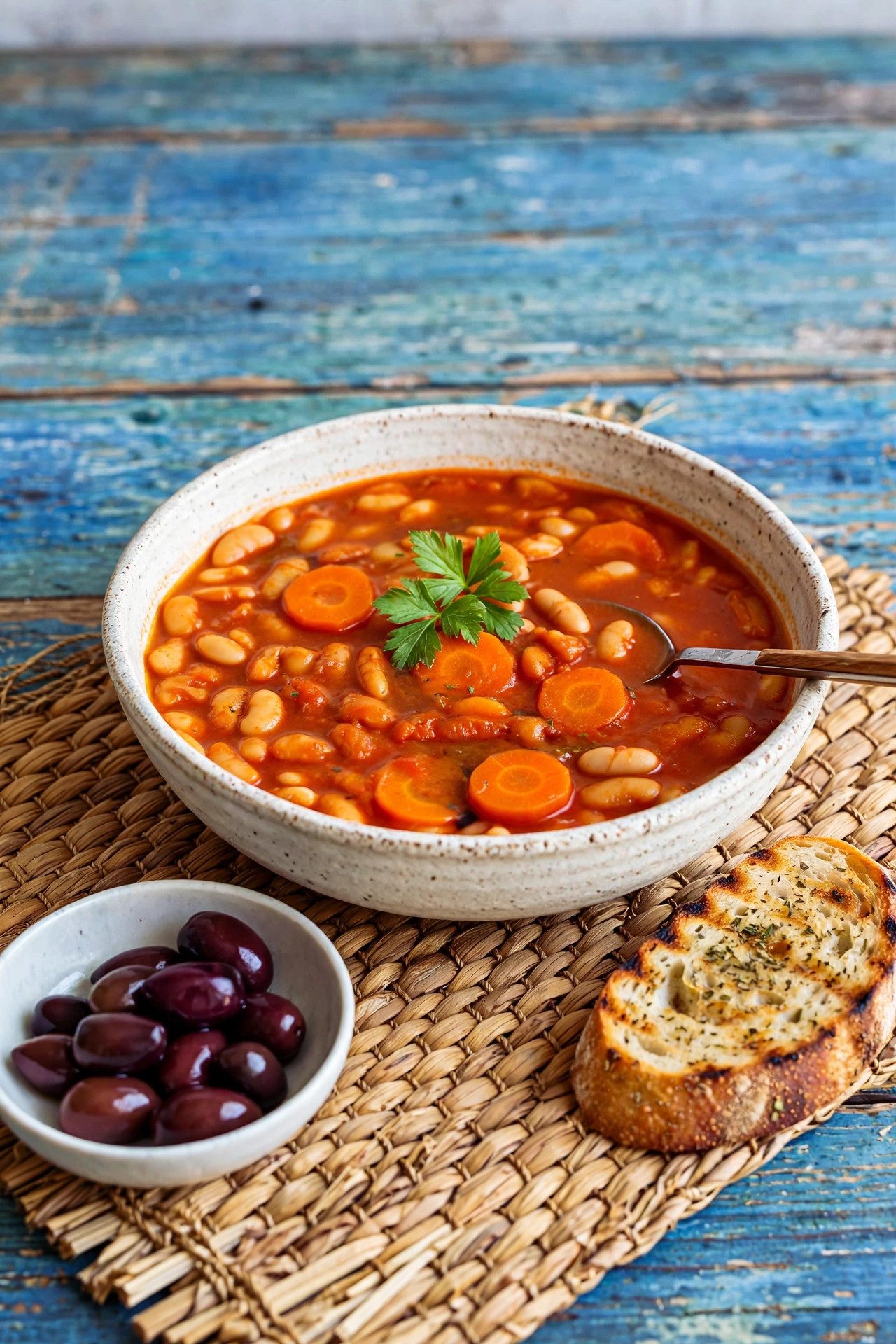
Ask a Greek family which dish tastes like Lent, and fasolada will be named before you finish the question. This white bean soup — beans simmered with tomato, carrot, celery and onion until the broth turns rich and almost creamy — is so woven into Greek life that it is often called the country's national dish. It is also, by design, a fasting dish: built entirely from the pantry, filling enough to carry a household through a day of work, and made to be cooked in a big pot and shared.
In its classic form, fasolada is finished with a generous pour of olive oil. That version belongs to the fast days when oil is permitted. But on a strict fast day — the weekdays of Great Lent, and the Wednesdays and Fridays kept through the year — oil is set aside along with meat, dairy, eggs, fish and wine. This is the strict-day way to make the soup: no oil at any stage, with the beans themselves doing the work of thickening the broth. Nothing is missed. A bowl of this, eaten slowly at the day's main meal, is exactly what generations of Orthodox kitchens have relied on when the fast is at its most demanding.
Ingredients
- 500 g dried white beans (cannellini or navy), soaked overnight
- 1 large onion, finely chopped
- 3–4 medium carrots, cut into rounds
- 3 stalks celery, chopped
- 2 tbsp tomato paste
- Pinch of paprika, sweet or hot
- About 1.5 litres water, plus more as needed
- 2 tsp fine salt, or to taste
- Freshly ground black pepper, to taste
Method
- Drain the soaked beans and rinse them well. Put them in a large pot, cover generously with fresh cold water, bring to the boil, and parboil for 25–30 minutes, until the beans are just beginning to soften. Drain and set aside.
- While the beans parboil, finely chop the onion and celery and cut the carrots into rounds.
- Return the beans to the pot with the chopped vegetables. Stir in the tomato paste and the paprika, then pour in enough boiling water to cover everything by about 2 cm.
- Simmer gently, partially covered, for 35–45 minutes, until the beans are completely tender. To thicken the broth without oil, mash a ladleful of beans against the side of the pot — or blend one cup of the soup and stir it back in — and simmer a few minutes more.
- Season with the salt and pepper near the end of cooking. Take the pot off the heat and let the soup rest for 10 minutes; it thickens as it stands.
- Serve steaming hot, with Kalamata olives and crusty bread alongside if you like — both are traditional at the Lenten table.
Rule source: Orthodox fasting rule per the Typikon (chs. 32–33), as published in OCA and GOARCH fasting guidance: on a strict fast day, no meat, dairy, eggs, fish, wine or oil are eaten.
Notes
- The oil-day version. On a Saturday or Sunday in Lent, or any day your calendar marks as a wine-and-oil day, make the soup exactly the same way, then stir in 100–130 ml of good olive oil at the very end and simmer two minutes more. That is the classic fasolada — it simply belongs to a different level of the fast, so it is a different tag in our collection, not a footnote cheat.
- Thickening without oil. The broth's body comes from the beans. Mashing a ladleful into the pot (step 4) is the traditional trick; don't skip the 10-minute rest, which finishes the job.
- Beans matter. Fresher dried beans — smooth, white, unblemished — cook faster and more evenly. Old beans may need a longer parboil.
- Shortcut. Three 400 g cans of cannellini beans, drained and rinsed, can replace the dried beans: skip the parboil and simmer everything together for about 25 minutes.
- Leftovers. Fasolada keeps 4 days in the fridge and freezes well for up to 3 months; loosen with a little water when reheating.
Frequently asked questions
Can I eat fasolada on a strict fast day?
Yes — as made here. This version contains no oil, wine, meat, dairy, eggs or fish, which is what a strict day asks. The familiar version finished with olive oil is for oil days.
Can I use canned beans?
Yes. Use three 400 g cans, drained and rinsed, skip the parboiling step, and simmer the soup for about 25 minutes instead.
What gives the soup its body if there is no oil?
The beans themselves. Their starch thickens the broth as they soften, and mashing a ladleful back in makes it almost creamy. ---