Semolina Halva: The Lenten Sweet, Made Oil-Free for Strict Fast Days
Every fasting tradition keeps one sweet that proves the fast is not a punishment, and for Greek Lent it is semolina halva. The recipe is so simple it is remembered as a ratio — "1:2:3:4" — oil, semolina, sugar, water, toasted and set with cinnamon syrup, raisins and almonds. It appears at memorial tables, at the end of Lenten meals, and in monastery guesthouses, and it asks for nothing from the fridge: no butter, no eggs, no milk.
But read the ratio again: the "1" is oil. The classic halva is a wine-and-oil-day sweet, however Lenten it feels. For the strict days — the weekdays of Great Lent, when oil itself is set aside — Greek cooks have a second way: toast the semolina dry. It takes patience and constant stirring, and the result is a fraction less rich and every bit as fragrant, the grains swelling in cinnamon-lemon syrup until they set into a sliceable, amber pudding. This is that version.
Ingredients
- 2 cups semolina (1½ cups coarse + ½ cup fine)
- 3 cups sugar
- 4 cups water
- 1 cinnamon stick
- Zest of 1 lemon
- 1 whole clove (optional)
- 1 tsp ground cinnamon, plus more for dusting
- ½ tsp ground clove
- ¼ cup blond raisins (optional)
- ½ cup almond slivers, dry-toasted (optional)
Method
- Make the syrup first. Put the sugar, water, cinnamon stick, lemon zest and the whole clove (if using) in a pan, bring to the boil, and boil until the sugar has completely dissolved and the syrup has thickened slightly. Take out the cinnamon stick, zest and clove, and keep the syrup warm over the lowest heat.
- Dry-toast the almond slivers, if using, in a dry frying pan until pale gold. Set aside.
- Put the semolina in a large, heavy pot over medium heat and dry-toast it, stirring constantly with a wooden spoon, until it turns a deep golden colour and smells nutty — 8–10 minutes. Keep it moving and watch it closely: dry semolina colours fast at the end and burns bitter if left alone.
- Take the pot off the heat. Standing well back, ladle in the warm syrup a little at a time, stirring constantly — the mixture will bubble up fiercely. When all the syrup is in, return the pot to a low heat.
- Add the ground cinnamon and ground clove. Cook, stirring, until the halva thickens into a very stiff paste that pulls away cleanly from the sides of the pot — it will not firm up much more as it cools, so cook it properly now.
- Take off the heat, fold in the raisins and half the almond slivers, cover the pot with a clean towel, and let it rest for 10 minutes.
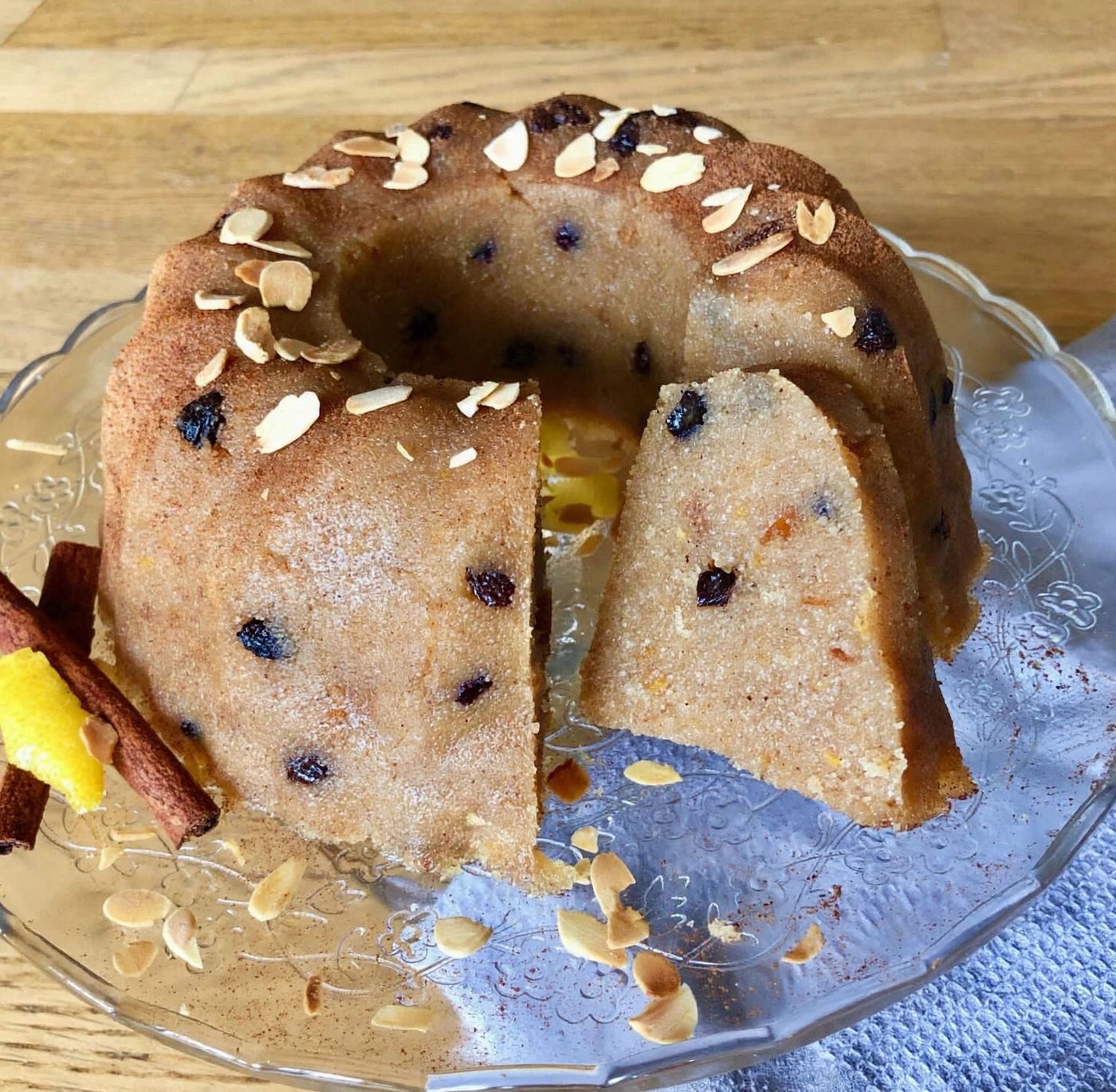
- Press the halva into a pudding mould or into individual bowls. Leave to cool for about 1½ hours, until set and sliceable.
- Turn out (if moulded), dust with cinnamon, and scatter over the remaining almond slivers.
Rule source: Orthodox fasting rule per the Typikon (chs. 32–33), as published in OCA and GOARCH fasting guidance: on a strict fast day, no meat, dairy, eggs, fish, wine or oil are eaten.
Notes
- The classic oil version. On a wine-and-oil day, make halva the famous 1:2:3:4 way: heat 1 cup of oil (half olive, half a neutral oil), toast the semolina in it until golden, then proceed with the syrup exactly as here. That preparation belongs to a different level of the fast, so it is a different tag in our collection, not a footnote cheat.
- Dry-toasting is the whole technique. Without oil, the semolina's flavour comes entirely from the toast. Take it to a deep, even gold — pale halva tastes raw — but never let it sit unstirred; it scorches in seconds at the end.
- The syrup moment. Hot syrup into hot semolina erupts. Add it a ladle at a time, off the heat, with your face turned away and the spoon moving.
- Honey variation. Many Greek cooks replace 1 cup of the sugar with honey in the syrup for flavour and to keep it from crystallising; the all-sugar syrup here is the plainer, strictest-day version.
- Storage. Halva keeps a week at room temperature under a cloth, and slices better on day two.
Frequently asked questions
Is halva really allowed on a strict fast day?
The classic halva is not — it is toasted in oil. This dry-toasted version is: it contains no oil, dairy, egg or any other restricted ingredient, only semolina, sugar, water, spices, raisins and almonds.
Can I make it with only coarse semolina?
Yes. The mix of coarse and fine gives a slightly softer set; all-coarse is more rustic and grainy, which many people prefer.
Why did my halva not set?
It was taken off the heat too early. The mixture must be a very stiff paste that pulls away from the pot before it goes into the mould — it firms only a little as it cools. ---