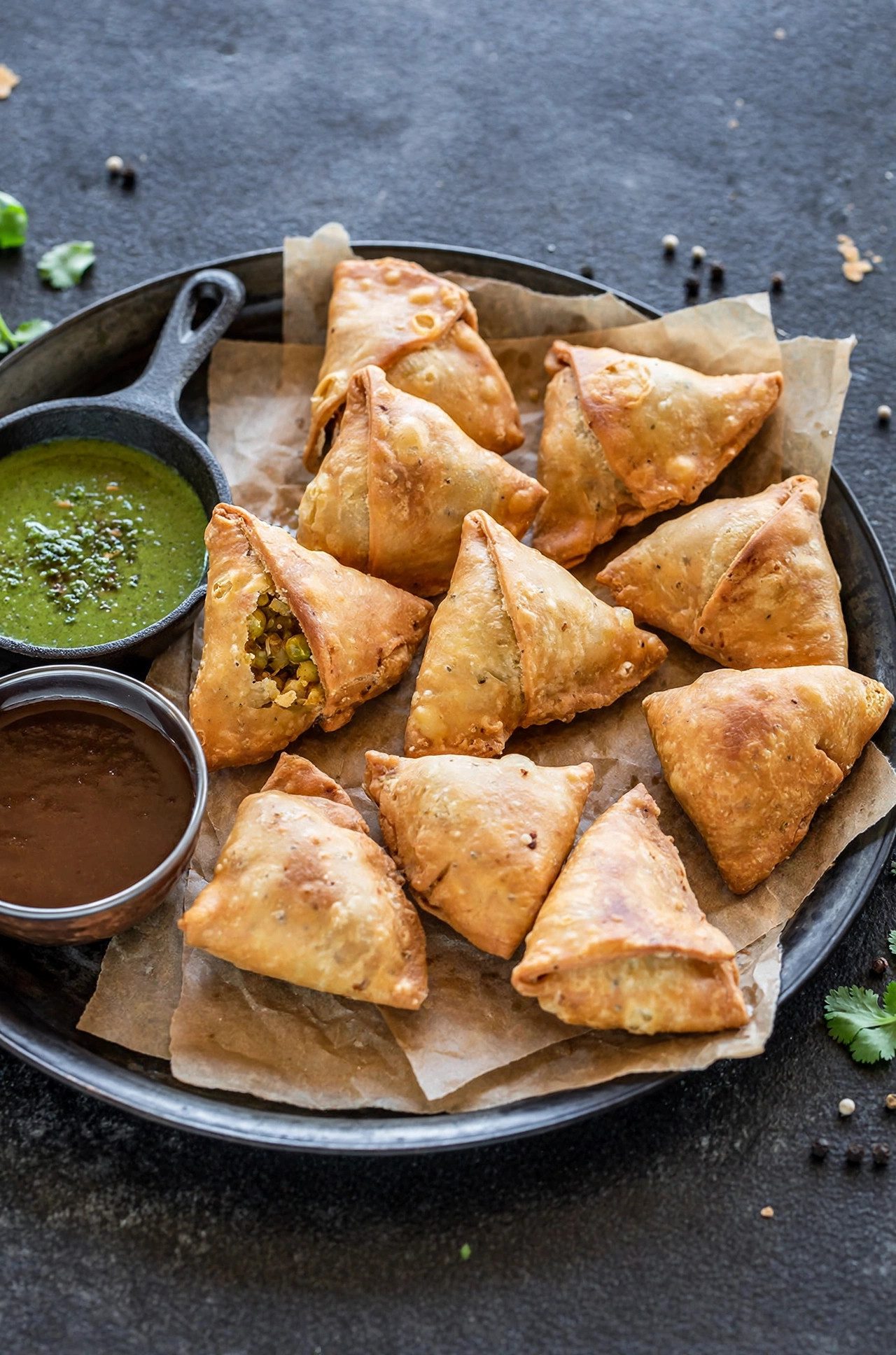
Vegetable Samosas: A Crisp Potato and Pea Pastry Recipe for Iftar
Walk through any South Asian neighbourhood in the last hour before sunset in Ramadan and you will smell samosas before you see them: frying oil, cumin, toasting pastry. The samosa is the iftar snack par excellence — crisp enough to hear, spiced enough to wake a fasting palate, and filling in the way only potato in pastry can be. Families buy them by the dozen from the same vendor every year; the ambitious fry their own, and the smell drifting from a home kitchen at 5 p.m. is its own announcement that the fast is nearly done.
The secret of a great samosa is patience, twice over. The dough must rest, and the frying must start in oil that feels almost too cool — that slow first fry is what sets the crust shattering-crisp instead of bubbled and tough. This filling is the classic: potato and peas with cumin, fennel, crushed coriander seed and the sour lift of amchur (dried mango powder). It is fully vegetarian, keeps beautifully, and freezes raw so well that a Ramadan cook can shape a double batch on a quiet afternoon and fry from frozen all month. Make them early, hold them warm, and put them on the table the moment the fast breaks.
Ingredients
- 2 cups (260 g) all-purpose flour
- 1 tsp ajwain (carom seeds)
- 1/4 tsp salt, for the dough
- 4 tbsp + 1 tsp (65 ml) neutral oil, for the dough
- About 6 tbsp water, to bring the dough together
- 500 g potatoes (3–4 medium), boiled and mashed
- 2 tbsp oil, for the filling
- 1 tsp cumin seeds
- 1 tsp fennel seeds
- 2 tsp coriander seeds, crushed
- 1 tsp finely chopped fresh ginger
- 1 green chili, finely chopped
- 1/4 tsp hing (asafoetida), optional
- 1/2 cup + 2 tbsp green peas (frozen, thawed)
- 1 tsp ground coriander
- 1/2 tsp garam masala
- 1/2 tsp amchur (dried mango powder)
- 1/4 tsp red chili powder, or to taste
- 3/4 tsp salt, for the filling
- Neutral oil, for deep frying
- Tamarind chutney and green chutney, to serve (optional)
Method
- Make the dough: whisk the flour, ajwain and salt in a large bowl. Add the oil and rub it in with your fingertips for 2–3 minutes, until the mixture holds its shape when pressed — this is what makes the crust flaky. Add the water a little at a time and bring together into a stiff dough; do not knead it smooth. Cover with a damp cloth and rest for 40 minutes.
- Make the filling: heat the 2 tablespoons of oil in a pan over medium heat. Add the cumin seeds, fennel seeds and crushed coriander seeds and let them sizzle for a few seconds. Add the ginger, green chili and hing and cook for 1 minute.
- Add the mashed potatoes and the peas, then the ground coriander, garam masala, amchur, chili powder and salt. Mix well, lightly mashing as you go, then take off the heat and let the filling cool completely.
- Shape: divide the rested dough into 7 equal balls. Roll one ball into a thin oval about 15–18 cm across and cut it in half. Brush the straight edge with water, bring its two corners together and pinch to form a cone. Fill the cone with 1–2 tablespoons of filling, brush the open edges with water, and pinch firmly shut. Repeat, keeping the shaped samosas under a damp cloth.
- Fry low and slow: heat oil in a deep pan to about 140°C (285°F) — no hotter. Lower in a batch of samosas without crowding and fry gently for 10–12 minutes, until firm and pale gold. Raise the heat to about 175°C (350°F) and fry until deep golden and crisp. Drain on a rack or paper towel and repeat, letting the oil cool back down between batches.
- Serve hot, with tamarind and green chutneys for dipping.
Rule source: Qur'an 2:183–187 — the Ramadan fast is kept from dawn to sunset ('eat and drink until the white thread of dawn becomes distinct… then complete the fast until nightfall'); iftar is the meal that breaks it at sunset. No ingredient restrictions apply beyond the standing halal rules; these samosas are plant-based.
Notes
- The low fry is non-negotiable. Samosas dropped into hot oil bubble, toughen and stay raw inside. Start low (140°C / 285°F), finish hotter — every time.
- Freeze them raw. Shape, freeze on a tray until firm, then bag for up to 2 months. Fry from frozen, adding a few minutes at the low temperature.
- Baked or air-fried. Brush with oil and bake at 180°C / 350°F for 30–35 minutes, or air-fry at 190°C / 375°F for about 20 minutes, turning once. The crust is different — drier, more biscuity — but the samosas are still very good.
- Amchur gives the filling its gentle sourness; a squeeze of lemon juice stirred in at the end is the household substitute.
- Reheating. Leftovers recrisp in a 180°C / 350°F oven in 5–10 minutes. Never the microwave, unless you enjoy soft pastry.
Frequently asked questions
When are samosas eaten during Ramadan?
At iftar, the sunset meal — they are the classic fried snack of the Ramadan table, eaten as the fast breaks alongside soups, dates and chutneys.
Are these samosas vegan?
Yes — flour, oil, potato, peas and spices, nothing else. They are also halal by construction: no meat, no pork, no alcohol.
Why did my samosas come out soft or bubbly?
Almost always the oil: too hot at the start blisters the crust, and a soft dough never crisps. Keep the dough stiff, and let the first fry be slow and gentle. ---