Om Ali: An Egyptian Bread Pudding Recipe for Iftar
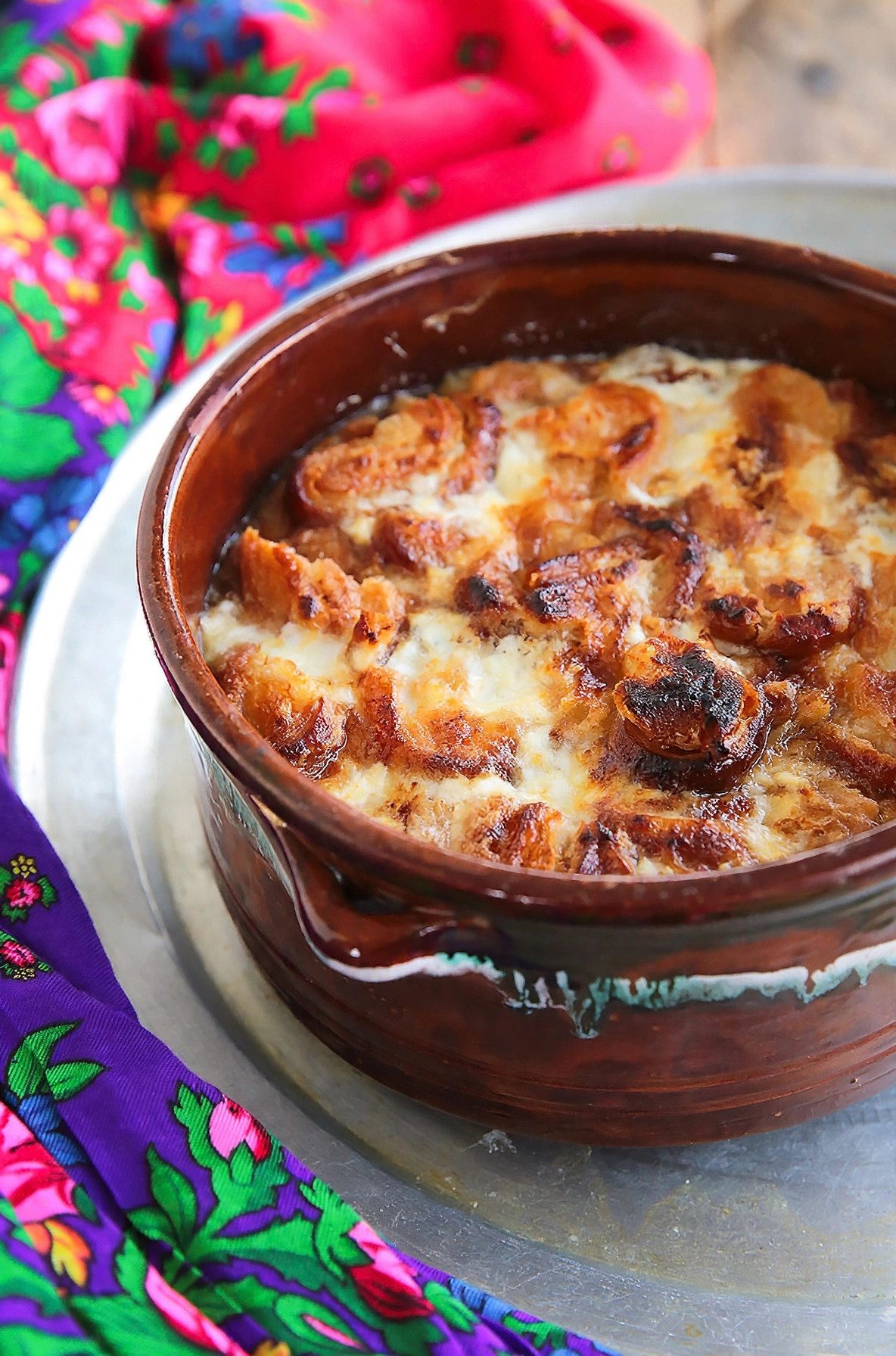
Om Ali is Egypt's answer to bread pudding, and it has been one for about eight hundred years — legend pins the name to the wife of a thirteenth-century sultan, who ordered the dessert made for a victory feast and distributed to the people. Whatever its true origin, the formula has never changed: crisped pastry torn into a dish, drowned in sweetened hot milk, crowned with cream and sent under a fierce heat until the top caramelises. In Ramadan it is a fixture of the Egyptian iftar table, brought out bubbling after the savoury dishes, in the deep clay dish (the buram) it will be served from.
Two choices make this version. The first is the base: palmiers — the sugar-crusted puff-pastry "elephant ears" — instead of plain puff pastry or flatbread. Their caramelised edges melt into the milk, and because they start out properly crisp, the top layer survives the broiler with real crunch instead of steaming to mush. The second is what is not in it: Om Ali is made without eggs, unlike a Western bread pudding, so the texture stays loose, milky and silky rather than custardy. It assembles in fifteen minutes, broils in ten, and must be eaten the moment it lands — which, at the end of a fasting day, is exactly the kind of dessert timing a table can get behind.
Ingredients
- 500 g palmiers (sugar-crusted puff-pastry cookies), store-bought or homemade
- 1 litre (4 1/4 cups) full-fat milk, preferably buffalo milk
- 1/2 cup (100 g) granulated sugar
- 250 g eshta (clotted cream), or 1 cup heavy cream whipped to medium peaks
- 1/2 cup (57 g) toasted hazelnuts, coarsely chopped, to serve (optional)
- 1/2 cup (57 g) pistachios, coarsely chopped, to serve (optional)
- 1/2 cup (75 g) raisins, to serve (optional)
- 1/4 cup (20 g) shredded coconut, to serve (optional)
Method
- Heat the oven's broiler to 200°C (390°F) and set a rack in the middle.
- Break three-quarters of the palmiers into a shallow oven-safe baking dish (about 23 × 33 cm / 9 × 13 in) in rough layers. Set the remaining quarter aside.
- Stir the milk and sugar together in a saucepan over medium-high heat until the sugar dissolves, then bring just to the boil.
- Pour the boiling milk over the palmiers in the dish and let it soak in for a minute.
- Arrange the reserved palmiers over the surface — this top layer stays crisp — and dot the whole surface with spoonfuls of eshta (or spread over the whipped cream).
- Broil for about 10 minutes, watching closely, until the top is deeply golden and caramelised in spots and the edges are bubbling.
- Serve immediately, hot, with the nuts, raisins and coconut in small bowls for everyone to add their own.
Rule source: Qur'an 2:183–187 — the Ramadan fast is kept from dawn to sunset ('eat and drink until the white thread of dawn becomes distinct… then complete the fast until nightfall'); iftar is the meal that breaks it at sunset, and Om Ali is one of its classic Egyptian desserts. No ingredient restrictions apply beyond the standing halal rules; this dish is vegetarian and contains no eggs.
Notes
- No palmiers? Baked puff pastry torn into pieces, or toasted croissants, are the accepted stand-ins; add about 2 extra tablespoons of sugar to the milk, since the palmiers' caramelised sugar is doing quiet work.
- The milk matters. Buffalo milk is the Egyptian ideal — rich and naturally sweet. Cow's whole milk plus 1/4 cup of heavy cream stirred in gets you close.
- Nuts on the side is this recipe's house rule: some are folded in by many cooks, but serving hazelnuts, pistachios, raisins and coconut separately keeps the pudding itself silky and lets every eater build their own bowl.
- Watch the broiler. The line between caramelised and burnt is about a minute at the end; this is not a dish to walk away from.
- Serve it once, hot. Om Ali does not reheat to its former glory — the top softens. Make the size your table will finish, and finish it together.
Frequently asked questions
When is Om Ali eaten during Ramadan?
At iftar, as a dessert — it comes to the table hot and bubbling after the savoury courses of the sunset meal.
Is Om Ali vegetarian?
Yes — pastry, milk, sugar and cream, and famously no eggs. It is halal by construction as well: no pork, no alcohol, no gelatine.
Can I make Om Ali ahead for iftar?
Assemble everything up to the broiler an hour ahead and keep it at room temperature; broil for the final 10 minutes just before serving so the top is crisp when it reaches the table. ---