Fattoush: A Lebanese Bread Salad Recipe for Iftar
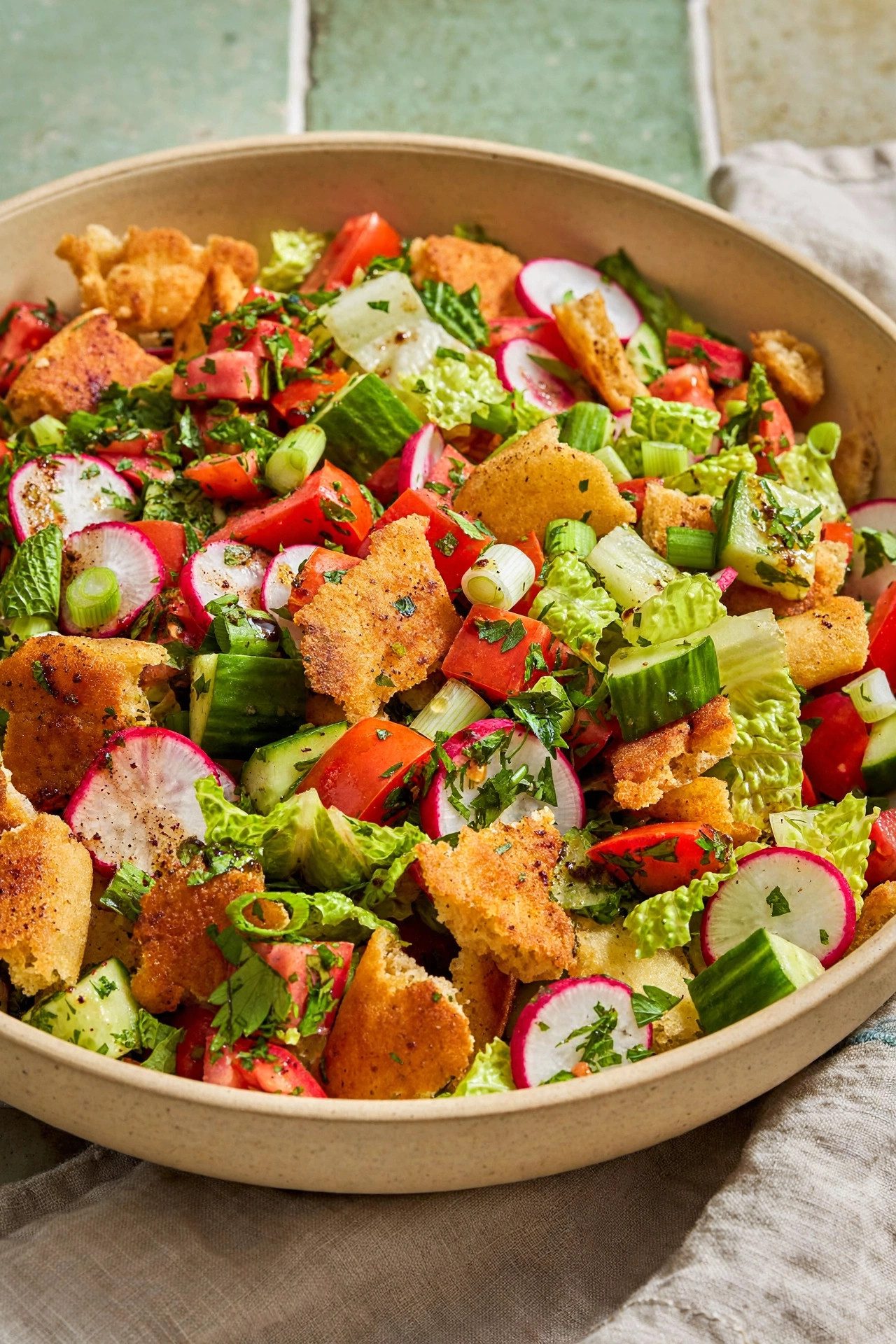
Every iftar table needs something bright. After the dates and the soup, when the cooked dishes arrive — rich, warm, generous — fattoush is the bowl that cuts through: Lebanon's bread salad, where yesterday's pita is crisped in olive oil and tossed with romaine, tomatoes, cucumber, radish and handfuls of parsley and mint under a dressing that leans hard on lemon and sumac. It is crunchy, tart and alive in a way that makes the whole table taste better.
Fattoush was born as thrift — a way for northern Lebanese kitchens to give stale pita a second life — and it became a classic because the combination is perfect: the bread soaks up the dressing without surrendering its crunch, and the sumac gives everything a deep, wine-dark tang (without a drop of wine anywhere near it). For Ramadan it has one practical rule, which this recipe builds in: the pita goes in at the last possible second. Crisp it in the afternoon, chop everything before sunset, and toss the salad together as the call to prayer sounds — fattoush waits for no one, and at iftar it never has to.
Ingredients
- 2 pita breads, torn into bite-sized pieces
- 3 tbsp extra-virgin olive oil, for crisping the pita
- 2 tsp ground sumac, divided
- Kosher salt and black pepper
- 1 heart of romaine lettuce, chopped
- 1 English cucumber, halved, seeds scraped, chopped
- 5 Roma tomatoes, chopped
- 5 green onions, white and green parts, chopped
- 5 radishes, stems removed, thinly sliced
- 2 cups chopped fresh parsley leaves
- 1 cup chopped fresh mint leaves (optional)
- 1/3 cup extra-virgin olive oil, for the dressing
- Juice of 1 large lemon (about 3 tbsp)
- 1 tbsp pomegranate molasses (optional but lovely)
- 1/4 tsp ground cinnamon
- 1/4 tsp ground allspice
Method
- Crisp the pita: heat the 3 tablespoons of olive oil in a large skillet over medium heat. Add the torn pita and fry, tossing often, until golden and crisp. Tip onto a paper-towel-lined plate and season at once with salt, pepper and a pinch of the sumac.
- Combine the vegetables: in a large mixing bowl, put the romaine, cucumber, tomatoes, green onions, radishes, parsley and mint, if using.
- Make the dressing: in a small bowl, whisk the lemon juice, the 1/3 cup of olive oil, the pomegranate molasses if using, the remaining sumac, the cinnamon, the allspice, and a pinch each of salt and pepper.
- Pour the dressing over the vegetables and toss lightly to coat everything.
- Add the crisped pita at the very last moment — for iftar, toss it in as the salad goes to the table — toss once more, taste for sumac and salt, and serve immediately.
Rule source: Qur'an 2:183–187 — the Ramadan fast is kept from dawn to sunset ('eat and drink until the white thread of dawn becomes distinct… then complete the fast until nightfall'); iftar is the meal that breaks it at sunset. No ingredient restrictions apply beyond the standing halal rules; this salad is plant-based.
Notes
- Don't dress it early. The vegetables can be chopped and the dressing whisked hours ahead, but the toss — and especially the pita — happens at serving time. Five minutes in the dressing and the crunch is gone.
- Baked pita works. For a lighter tray, bake the torn pita at 190°C / 375°F with a little olive oil until crisp, and season the same way.
- Sumac is not optional in spirit. If you cannot find it, extra lemon zest and juice is the nearest substitute — but the salad's signature tartness is the sumac's dried-berry tang.
- Purslane is the traditional green where it grows; romaine, as here, is the standard stand-in, and a handful of arugula is a welcome (if untraditional) guest.
- Scale for the table. Iftar salads disappear. This recipe doubles cleanly; keep the extra pita separate and toss a second bowl when the first empties.
Frequently asked questions
When is fattoush eaten during Ramadan?
At iftar, the sunset meal — as the fresh side dish alongside the soups and mains, not as the fast-breaking first bite (that honour belongs to dates and water).
Is fattoush vegan?
Yes — vegetables, herbs, bread and an olive-oil dressing, with pomegranate molasses as the only sweetener. It is halal by construction as well: no pork, no alcohol, nothing to check.
Can I make fattoush ahead for iftar?
Everything except the final toss, yes. Crisp the pita, chop the vegetables, whisk the dressing, and hold them separately; combine in the two minutes before the salad goes to the table. ---