Taramosalata: The Greek Fish Roe Dip of Clean Monday
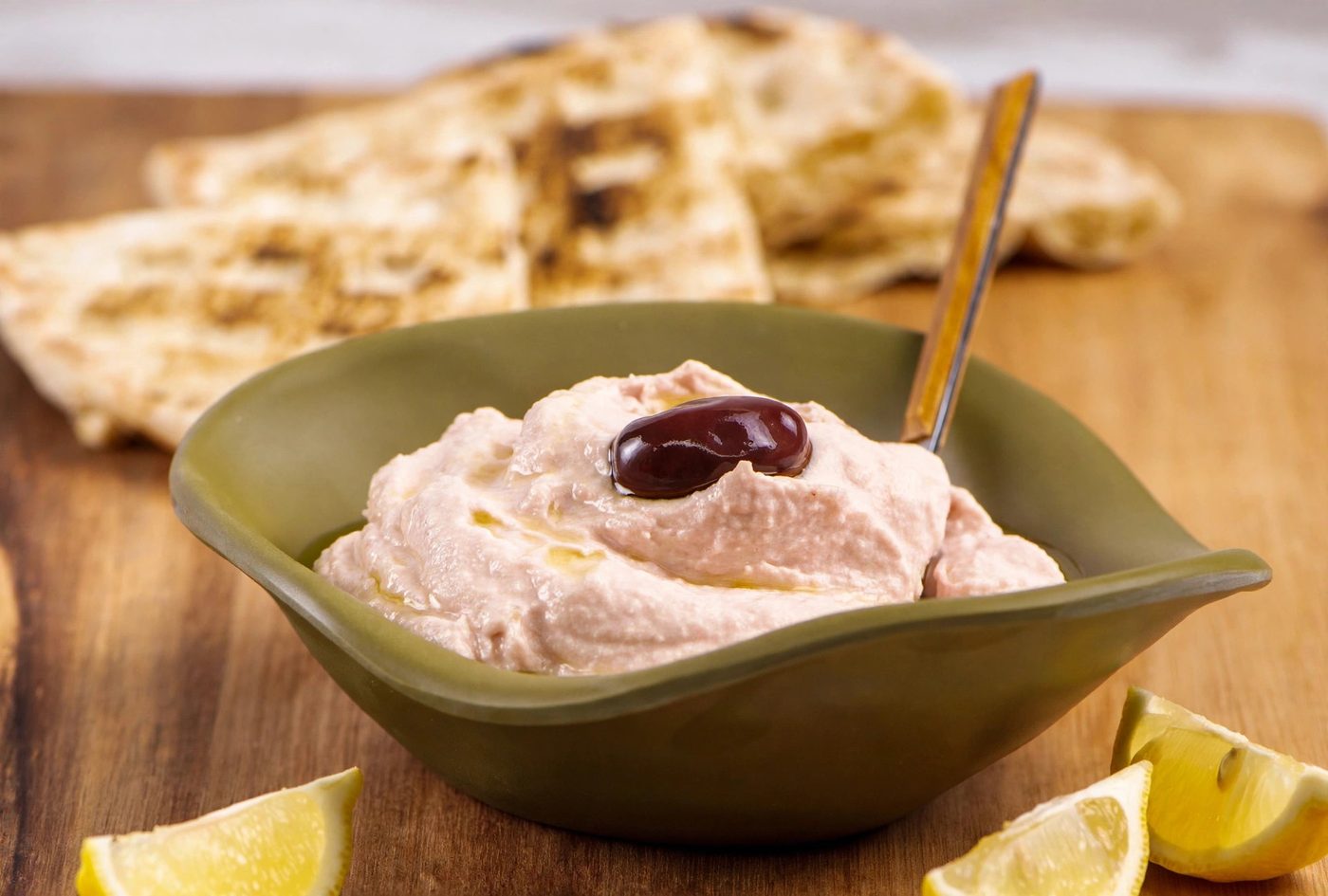
On Clean Monday, the first day of Great Lent, Greek families eat outdoors — kites in the sky, lagana bread on the cloth, and at the centre of the table a bowl of taramosalata: salted fish roe beaten with bread, lemon and olive oil until it turns pale, silky and impossibly light. It is the taste of Lent beginning, and no meze spread in the fasting seasons is complete without it.
Homemade taramosalata has nothing in common with the neon-pink tubs in a deli case — that colour is dye. Real taramosalata, made from undyed white tarama, runs from ivory to the palest blush depending on the roe, and the texture, emulsified slowly like mayonnaise, is closer to a savoury mousse. One honesty before the recipe: by the graded rule of the fast, roe counts as fish — so in this collection taramosalata is tagged for the fish days (the Annunciation, Palm Sunday, and other days the calendar permits fish, wine and oil), even though Greek tables famously serve it as Lent opens. Where a household's custom keeps it on Clean Monday, that is a local practice; the tag follows the rule.
Ingredients
- 100 g white tarama (salted, cured fish roe — cod, carp or mullet)
- 300 g stale white bread, crusts removed
- 170–180 ml olive oil
- Juice of 2 lemons, plus more to taste
- 1 medium red onion, finely grated
Method
- Soak the crustless bread in water, then squeeze it out very well — as dry as you can get it. Too much water left in the bread makes a runny dip.
- Put the bread, the grated onion and the tarama in a food processor. Blend until the mixture is a smooth, mashed pulp.
- Add half the lemon juice and blend briefly again.
- With the processor running on medium speed, pour the olive oil in a slow, thin stream, exactly as if you were making mayonnaise. Keep blending until all the oil is incorporated and the taramosalata is smooth, pale and creamy.
- Taste. If the roe was very salty, the cure is more lemon juice — and if needed a little more bread and oil. Blend again and adjust until the dip is lemony and balanced.
- Cover and chill for at least 30 minutes to let the flavours marry. Serve with pita and rustic bread, olives, and the other dishes of the table.
Rule source: Orthodox fasting rule per the Typikon (chs. 32–33), as published in OCA and GOARCH fasting guidance: on a fish day, backboned fish, wine and olive oil are permitted; meat, dairy and eggs are still set aside.
Notes
- The colour question. Tarama is sold undyed (ivory — "white tarama") and sometimes dyed pink. Undyed roe gives a dip anywhere from light beige to pale pink depending on the fish; the violent pink of commercial dips is food colouring. Buy white tarama from a fishmonger or a Greek or Turkish grocer.
- If the roe is very salty. Taste it first. A fiercely salty tarama can be soaked in water for 10–15 minutes before blending; a finished dip that is too salty is balanced with more bread, a little more oil, and more lemon.
- The emulsion rule. Oil goes in a thread, not a glug, with the machine running. Rush it and the dip splits and turns oily; take your time and it whips like mayonnaise.
- Potato variation. Some regions build the dip on mashed potato instead of bread — equally traditional, slightly denser, and the natural choice when the dip must be gluten-free.
- Make-ahead. Taramosalata keeps up to 7 days, covered, in the fridge, and improves overnight.
Frequently asked questions
Why is taramosalata not tagged for strict days, if it is the Clean Monday dish?
Because its main ingredient is fish roe, and roe is a fish product. The graded rule reserves fish for fish days. Greek households do celebrate Clean Monday with it — a real and widespread custom — but the tag in this collection follows the published rule, and the customs-vary note above applies.
Can I make it without a food processor?
Traditionally it was pounded in a mortar and whisked by hand — possible, and slow. A stick blender in a tall jug also works; add the oil in the same thin stream.
What do I serve it with?
Pita and rustic bread, olives, and the rest of a fasting meze table — fava (yellow split pea purée), skordalia, dolmades. ---