Talbina: A Sunnah Barley Porridge Recipe for Suhoor
Most suhoor food is chosen for the body — protein, slow carbohydrate, salt and water in the right proportions. Talbina is chosen for the heart as well. It is a simple porridge of barley flour whisked into milk, and it carries a distinction almost no other dish can claim: it is named in the hadith, where the Prophet Muhammad ﷺ commended it for the grieving and the sick, saying it brings comfort to the heart and removes some of the sorrow (Sahih Muslim 2216; see also Sahih al-Bukhari 5417). Fourteen centuries later, Muslim families still make it in Ramadan, and especially at suhoor.
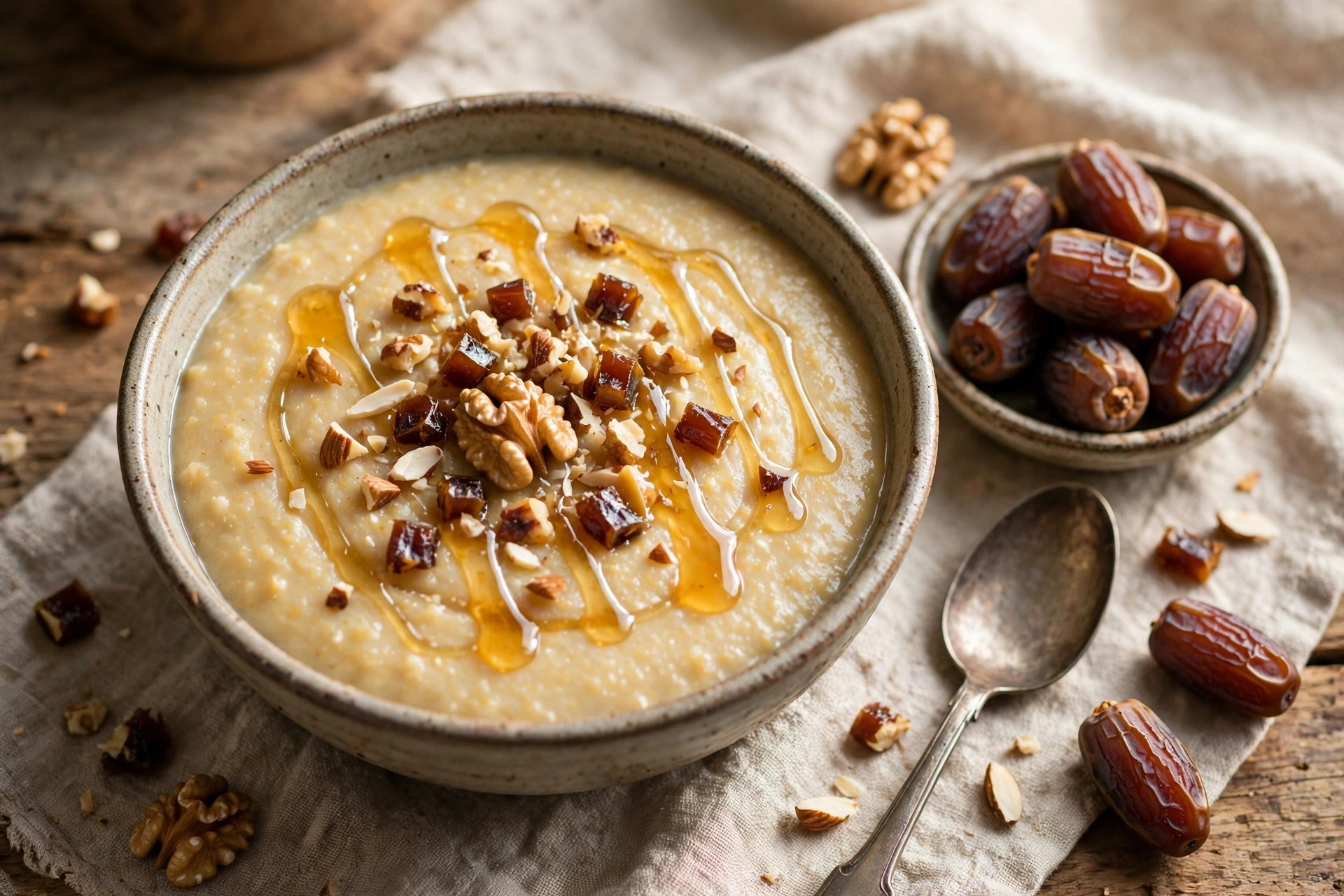
The porridge itself earns the honour practically. Barley is one of the slowest-burning grains there is — a bowl of talbina releases its energy in a long, even curve that suits a day without food — and its gentle, honeyed warmth is easy on a stomach at 4 a.m. The flour is toasted first, whisked smooth with a whisper of cinnamon, and crowned with dates and nuts the way the source tradition serves it; talbina is ready in about fifteen minutes and asks nothing of the cook but a whisk and patience. Make it in the quiet before dawn, eat it warm with the family, and begin the fast on a food that has carried Muslims into hard days for a very long time.
Ingredients
- 1/3 cup barley flour
- 2 cups milk
- 1/2 tsp ground cinnamon
- 1 tsp ghee, for the topping
- 1/2 cup Medjool dates, diced
- 1/4 cup walnuts, chopped
- 1/4 cup pistachios, chopped
- A sprinkle of black nigella seeds, to finish
- A drizzle of honey, to finish
Method
- Toast the barley flour in a non-stick pot until it slightly changes colour.
- Add the milk and whisk together over medium-high heat until it starts to thicken.
- Add the cinnamon and keep whisking until the porridge is thick and creamy and coats the spoon.
- Pour into bowls.
- Make the date and nut topping: toast the diced dates, walnuts and pistachios in the ghee for 1–2 minutes, until caramelised.
- Top the porridge with the date and nut topping, a sprinkle of black nigella seeds and a drizzle of honey. Serve warm or at room temperature.
Rule source: Qur'an 2:187 — 'eat and drink until the white thread of dawn becomes distinct to you from the black thread; then complete the fast until nightfall.' Suhoor is the pre-dawn meal eaten before the fast begins. Talbina is a Sunnah food with hadith attestation (Sahih al-Bukhari 5417; Sahih Muslim 2216), where it is described as bringing comfort to the heart and easing sorrow. No ingredient restrictions apply beyond the standing halal rules.
Notes
- Toast the flour first. A few minutes in the dry pot, until it just changes colour, deepens the flavour and gives the bowl a toasted depth — whisk steadily once the milk goes in and it thickens smoothly without lumps.
- Thickness is a dial. More flour or a longer whisk over the heat for a porridge that holds a spoon upright; less for a drinkable bowl. It thickens as it stands — serve it slightly looser than you want it.
- The topping is toasted, not scattered. Dates and nuts straight from the packet are fine, but a minute or two in ghee until the dates caramelise is what lifts the bowl — do not skip it. Cardamom can stand in for the cinnamon, as it often does.
- Leftovers keep up to 3 days in the fridge in an airtight container; rewarm in a pot with a drizzle of milk, stirring until creamy again.
- Barley flour is sold as talbina flour in Middle Eastern and South Asian grocers and online; finely milled whole barley flour is the same thing — or grind hulled barley yourself in a food processor or coffee grinder, as many home cooks do.
Frequently asked questions
When is talbina eaten during Ramadan?
At suhoor, the pre-dawn meal — it is eaten before the fast begins at dawn, for its slow-release energy and its place in the Sunnah.
Is talbina vegetarian?
Yes — barley flour, milk, cinnamon, dates and nuts, the topping toasted in ghee and honey drizzled over the top. It is halal by construction: no meat, no pork, no alcohol. (The milk, ghee and honey keep it from being vegan.)
Why is talbina called a food of comfort?
Because of its hadith attestation: it was prepared in the Prophet's ﷺ household for times of grief and illness, and he described it as bringing comfort to the heart — which is why it is still made for the sick and the sorrowful, as well as for suhoor.