Labneh and Olives: A Levantine Strained Yogurt Plate Recipe for Suhoor
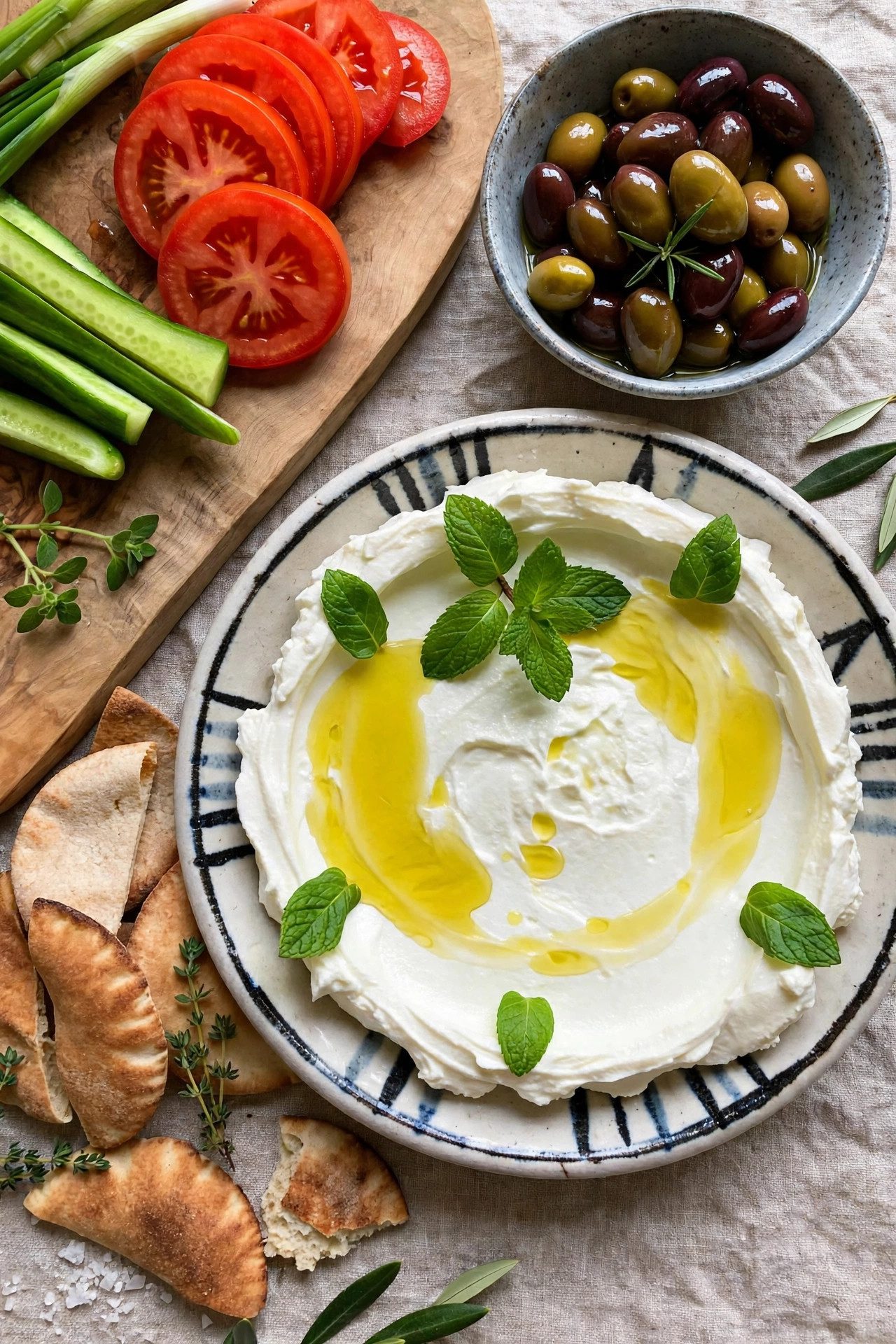
The labneh plate is the suhoor of minimum effort and maximum effect. It is three ingredients — yogurt, salt, time — and then whatever the kitchen has: a pour of good olive oil, a bowl of olives, warm pita, maybe some mint from the windowsill or a dusting of za'atar. In Levantine homes labneh lives in the fridge the way butter does in other countries, always there, always ready, and in Ramadan it is the plate that makes the pre-dawn meal happen when nobody has the energy to cook.
The making could hardly be simpler: stir salt through plain yogurt and let it hang in cloth overnight, and the whey runs out leaving a thick, tangy cheese that holds its shape. Greek yogurt, already strained once, needs only a short rest; regular yogurt wants the full night. The flavour is all sour cream's brighter cousin — clean, tart, infinitely adaptable — and at suhoor its virtues are practical: dairy protein to go with the olives and bread, a plate that assembles in two minutes at 4 a.m., and something cool and gentle for a stomach that has been fasting for weeks. Strain it during the day, forget about it in the fridge, and the pre-dawn meal is done before you are fully awake.
Ingredients
- 8 cups (2 kg) plain whole-milk yogurt (Greek yogurt works; it simply needs less straining)
- 1/4 tsp salt
- Extra-virgin olive oil, to serve generously
- 2 cups marinated olives (mixed green and black)
- Warm pita bread, to serve
- Fresh mint leaves and/or za'atar, to finish (optional)
- Sliced tomato and cucumber, to serve (optional)
Method
- The day before: line a sieve or colander with several layers of cheesecloth (or a clean muslin cloth) and set it over a deep bowl. Stir the salt through the yogurt, tip it into the cloth, and gather the edges.
- Strain for at least 6 hours and up to 24 — overnight in the fridge is ideal for a thick, spreadable labneh. The longer it drains, the thicker it becomes; keep the whey that drips out for baking or smoothies.
- At suhoor, unwrap the labneh and spread it in a shallow bowl, making a swirl with the back of a spoon to hold the oil.
- Pour over a generous pool of your best olive oil, scatter the olives alongside (or spooned over), finish with mint leaves or a dusting of za'atar, and carry the whole plate to the table with warm pita, tomato and cucumber.
Rule source: Qur'an 2:187 — 'eat and drink until the white thread of dawn becomes distinct to you from the black thread; then complete the fast until nightfall.' Suhoor is the pre-dawn meal eaten before the fast begins; the labneh plate is one of the Levant's simplest — yogurt, salt and oil, assembled in minutes. No ingredient restrictions apply beyond the standing halal rules.
Notes
- Start with Greek yogurt for the shortest path — it is already strained once, so 6–8 hours gives a perfect spread. Regular yogurt wants the full 24.
- Keep the whey. The yellowish liquid that drains out is full of protein and minerals — thin soups with it, bake bread with it, or stir it into hummus.
- Labneh balls (labneh makkabas): roll the thick labneh into balls with 2–3 tablespoons each, submerge in olive oil in a jar, and they keep for months in a dark cupboard — an instant suhoor pantry.
- Finishes to rotate: za'atar and olive oil; mint and lemon zest; roasted cherry tomatoes; pomegranate seeds for colour; red pepper flakes for heat.
- Store fresh labneh in an airtight container in the fridge for up to 2 weeks.
Frequently asked questions
When is the labneh plate eaten during Ramadan?
At suhoor, the pre-dawn meal — it is eaten before the fast begins at dawn, and its overnight straining means no cooking at 4 a.m.
Is labneh vegetarian?
Yes — strained yogurt, salt and olive oil. It is also halal by construction: no meat, no pork, no alcohol. (Rennet cultures in yogurt vary by brand; plain vegetarian-strained yogurt keeps the vegetarian claim exact.)
How thick should I strain it?
For the plate, spreadable but firm — overnight, about 12–24 hours. Go past a day and it firms toward a cheese you can roll into balls. ---