Pasta e Ceci: A Roman Chickpea Pasta for Catholic Lent
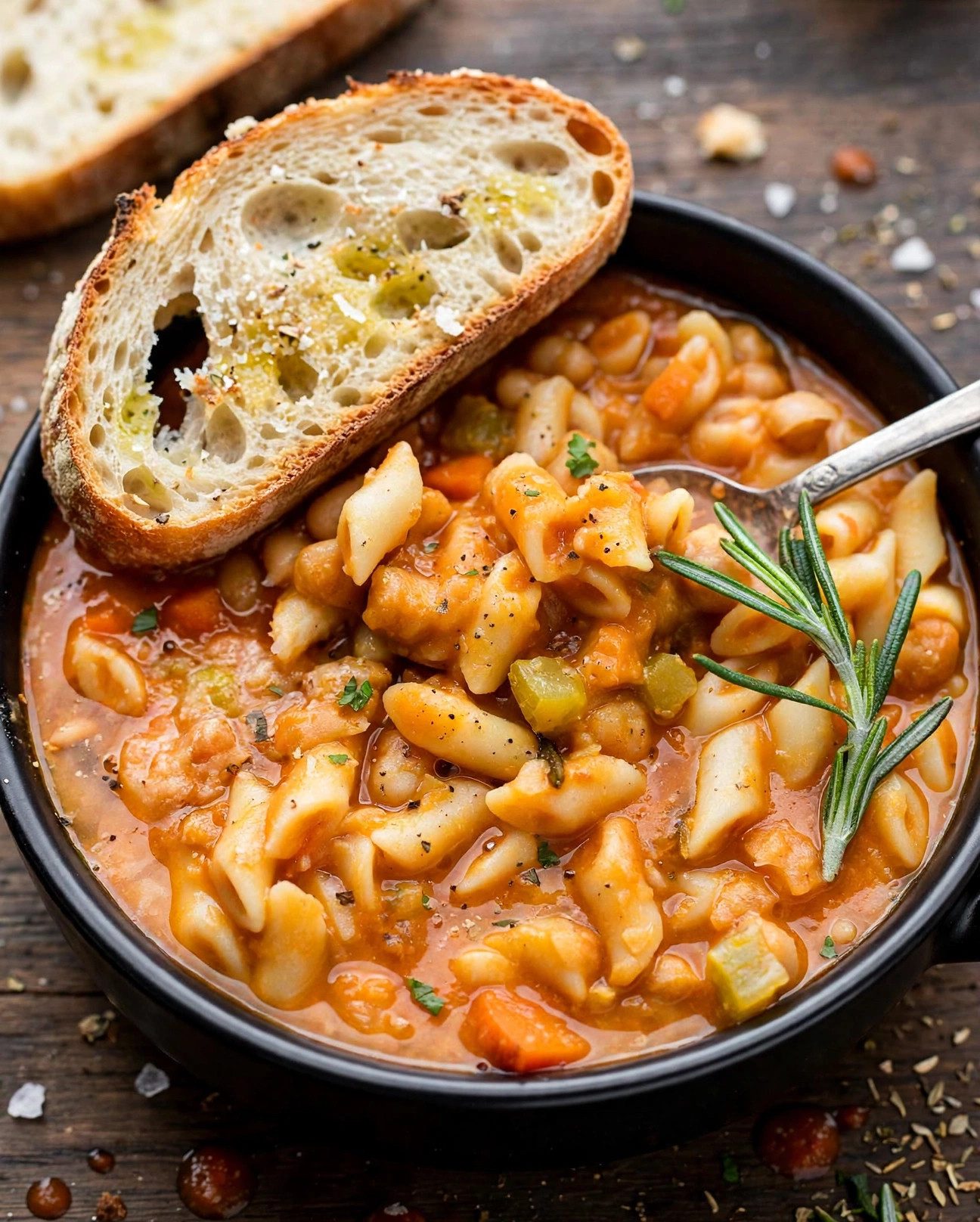
Pasta e ceci is Rome's answer to a cold evening and an empty larder: chickpeas and small pasta simmered together in one pot, in a tomato broth sharpened with garlic and rosemary. It is cucina povera — the cooking of making do — and dishes like it carried Italian families through Lent for generations, because it asks for nothing the pantry doesn't already hold and gives back a bowl that genuinely satisfies.
For a Catholic kitchen, its virtues line up exactly with the season. There is no meat in the pot and no meat stock underneath it — the broth is vegetable, the body comes from the chickpeas themselves, crushed a little so they thicken the cooking liquid as the pasta cooks in it. On an ordinary Friday of Lent it is supper, plain and simple. On Ash Wednesday or Good Friday, when the day is built around one full meal, pasta and beans together are substantial enough to be that meal. This is not a side dish pretending; it is the real thing, from a city that has kept Lent longer than almost anywhere.
Ingredients
- 1/2 cup extra-virgin olive oil
- 1 medium onion, diced
- 2 medium carrots, diced
- 2 ribs celery, diced
- 5 cloves garlic, minced
- 1/4 tsp crushed red pepper flakes, or more to taste
- 3 cans (450 g / 16 oz each) chickpeas, drained but not rinsed
- 1 cup canned plum tomatoes, hand-crushed
- 1 Parmigiano Reggiano rind (optional)
- 1 sprig fresh rosemary
- 1 litre (4 cups) low-sodium vegetable stock, plus more as needed
- 225 g (1/2 lb) small pasta — small shells, ditalini or elbows
- Fine sea salt and freshly ground black pepper, to taste
- Grated Parmigiano Reggiano, to serve (optional)
- Crusty bread, to serve (optional)
Method
- Warm the olive oil in a large heavy pot over medium-low heat. Add the onion, celery and carrots with a pinch of salt and cook gently, stirring now and then, until very soft and sweet, about 12 minutes.
- Stir in the garlic and cook until just golden, 1–2 minutes, then add the red pepper flakes for the last 30 seconds.
- Add the crushed tomatoes, the chickpeas, the Parmigiano rind if using, the rosemary and the vegetable stock. Bring to the boil, then lower the heat and simmer for 15 minutes.
- Crush some of the chickpeas against the side of the pot with a wooden spoon — or give the pot a few pulses with an immersion blender — until the broth turns creamy in places while plenty of chickpeas stay whole.
- Stir in the pasta and cook in the broth until al dente, stirring often so it doesn't catch on the bottom. The pasta will drink up liquid as it cooks; add more stock or hot water a splash at a time until the consistency pleases you — brothy or thick, both are traditional.
- Fish out the rosemary stem and the cheese rind. Taste and adjust the salt, pepper and heat, then serve in warm bowls with crusty bread, a drizzle of your best olive oil and grated Parmigiano for those who want it.
Rule source: Catholic abstinence rule: Code of Canon Law c. 1251 and the USCCB norms — on days of abstinence (every Friday of Lent; Ash Wednesday and Good Friday are also days of fasting) the meat of land animals and birds is excluded, while fish, dairy and eggs are permitted. This dish is built on vegetable stock, so it is meatless to the last spoonful.
Notes
- Don't rinse the chickpeas. Drain them, but let the starchy canning liquid clinging to them go into the pot — it helps the broth turn creamy.
- Consistency is a choice, not a rule. Romans argue about whether pasta e ceci should be soupy or nearly a stew. Crush more chickpeas and hold back liquid for the thick version; add stock for the brothy one.
- The cheese rind is optional. A Parmigiano rind simmered in the broth adds depth and is perfectly permitted on a day of abstinence — dairy is not meat. Leave it out, and the grated cheese at the table too, and the dish is fully plant-based.
- Leftovers thicken. The pasta keeps absorbing broth in the fridge. If you plan to eat it twice, cook the pasta separately and combine bowl by bowl; otherwise loosen leftovers with a splash of water as they reheat. Eat within 3 days.
Frequently asked questions
Is pasta e ceci allowed on a Lenten Friday?
Yes. Abstinence excludes the meat of land animals and birds; this pot contains none — no meat, and a vegetable stock rather than a meat broth underneath it.
Can it be the one full meal on Ash Wednesday or Good Friday?
Yes. Chickpeas plus pasta is a complete, sustaining main — protein, starch and broth in one bowl — which is why this post carries the strict-day tag.
Is the Parmesan a problem for the fast?
No. Dairy is permitted on days of abstinence. Skip the rind and the garnish and the dish is vegan as well as meatless. ---